The form of a crystal or mineral is never random: it is the result of precise geometric laws that govern the atomic structure of matter.
While the natural form of a crystal depends on the crystal system to which it belongs and the conditions of its formation, the forms cut and polished by human hands respond to both aesthetic and functional intent.
Understanding the diverse geometries available – from pyramids to spheres, from raw specimens to symbolic engravings – allows one to fully appreciate the collectible and visual value of each piece, as well as to use minerals in decorative, educational or simply conscious observation contexts. This article explores the principal forms in which crystals and minerals can be found, analysing how geometry influences perception and practicality of use.
Natural Forms and Their Geological Origin
Minerals form according to rigid crystallographic rules determined by their chemical composition and the crystal system to which they belong. A quartz crystal, for example, belongs to the trigonal system and will naturally tend to develop a prismatic form terminated by a six-faced pyramid. Amethyst, which is a violet variety of quartz, maintains the same crystalline structure and thus develops analogous geometries.
Other mineral species, such as fluorite belonging to the cubic system, form natural cubes or octahedra. These primary forms are not modified by human intervention, but rather emerge during the crystallisation process within the parent rock during the cooling of magma or precipitation from aqueous solutions.
When a crystal grows in confined space within the rock, its form can be irregular or incomplete: a face might not develop due to lack of space, or the crystal might present striations and deformations due to competition with nearby crystals. Conversely, crystals that develop in cavities or geodes – such as those found in quartz druses or volcanic cavities – manifest more regular and geometrically perfect forms. This variety of natural forms represents a visible document of the mineral's geological history and the environmental context in which it developed.
Cut and Worked Forms: Geometry and Intention
The geometric forms obtained through cutting and polishing represent a modern evolution of the relationship between collector and mineral.
The polished sphere is one of the most common forms and geometrically represents maximum balance and symmetry; it is obtained by the complete rounding of a piece of mineral and allows observation of the internal structure from every angle. Spheres do not possess particular added symbolic significance, but they offer considerable practical value: being free of sharp edges, they are pleasant to the touch and can be placed on any surface without risk of damage.
The pyramid is perhaps the most sought-after worked form by collectors. Obtained by polishing the lower part of the mineral to form a square or rectangular base, with the upper faces converging towards an apex, the pyramid possesses well-defined geometry and superior stability compared to natural crystals. This form allows one to appreciate variations in colour and transparency proceeding from the base towards the apex and offers markedly orderly aesthetics. Pyramids are created on crystals of amethyst quartz, citrine, rock crystal and many other easily workable minerals.
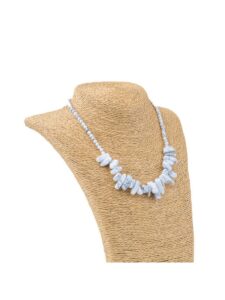
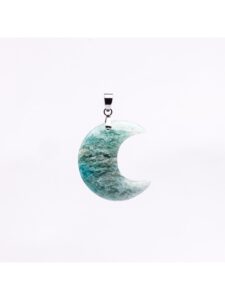
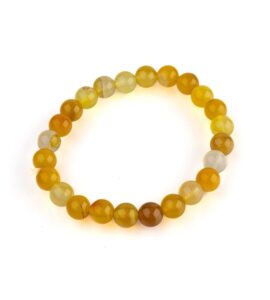
Symbolic engravings – such as mandalas, geometric symbols, esoteric seals and runes – are practised on the polished surface of flat or slightly domed minerals. These workings require great precision and transform the mineral into an object of visual contemplation, where the engraved pattern dialogues with the chromatic structure and transparency of the material. Other common forms include double-terminated points (two facing pyramids), polished cylinders, hearts and free forms personalised according to the collector's desire.
Physical Characteristics that Influence Working
Not all minerals are equally suited to being transformed into specific geometric forms. Mohs hardness represents the first evaluation criterion: very hard minerals, such as diamond (10), corundum (9) and quartz (7), tolerate cutting and polishing without degrading significantly. Conversely, softer minerals such as feldspar (6) and calcite (3) present greater difficulties during working and can chip during the process.
Tenacity – that is, the resistance of a mineral to breaking – is equally determining. Quartz possesses moderate tenacity and is generally fragile, especially along internal weakness directions; however, its attractive chromatic varieties (amethyst, citrine, rose) still make it ideal for working. Fluorite, despite lower hardness (4 on the Mohs scale), is sought after for the vibrancy of its colours and is worked into pyramids and spheres with particular care during the process. Cleavability – that is, the tendency of a mineral to separate according to precise planes – must be considered during cutting: calcite, for example, presents perfect cleavability along three directions and is therefore difficult to work into complex forms.
Transparency and translucency also influence the choice of form. Transparent or highly translucent minerals, such as rock crystal and amethyst, are valued by forms that allow light penetration – carefully polished spheres allow homogeneous refraction, while pyramids offer effects of light concentration towards the apex. Opaque minerals or those with significant inclusions can be more fascinating in less regular forms that emphasise chromatic characteristics rather than perfect geometry.
Conscious Use of Different Forms and Care Over Time
The use of a worked crystal or mineral depends primarily on the collector's intentions and personal preferences. Polished spheres are appreciated for their versatility: they can be placed on dedicated display stands, held in hand during moments of rest, or inserted into domestic environments as decorative objects without need for particular protection.
Pyramids, thanks to their stability and visual impact, are ideal for display in spaces dedicated to mineralogical collection. Symbolic engravings find their natural context as pieces for close observation, preferably illuminated in a way that highlights the detail of the engraving and the play of light within the mineral.
The conservation of worked minerals requires moderate attention. Regular cleaning with a soft, dry cloth prevents dust accumulation and maintains the brilliance of polished surfaces. Some fragile minerals, such as delicate calcite or feldspars, must be protected from accidental impact and drastic variations in humidity.
Prolonged exposure to direct heat sources can alter the colouration of some minerals – for example, citrine can fade over time if intensely exposed to ultraviolet rays. A cool, dry environment away from direct sunlight represents the ideal option for long-term conservation of any worked form.
The choice between a natural form and a worked form is ultimately a matter of personal sensitivity. Raw crystals maintain the fascination of the primary form and document the geological process in a direct and immediate way. Worked forms instead offer a mediation between the nature of the mineral and the aesthetic intentionality of humans, creating a dialogue between natural geometry and constructed perfection. Both approaches are legitimate and enriching from the perspective of conscious collecting.
Understanding the forms of crystals and minerals means entering into contact with the very geometry of matter and with the human work that transforms and enhances it. Whether one chooses an amethyst pyramid, a polished rock crystal sphere or a natural piece with a symbolic engraving, the value resides in awareness of the mineral's physical characteristics, the quality of the working and the conscious relationship that the collector develops with the object over time.